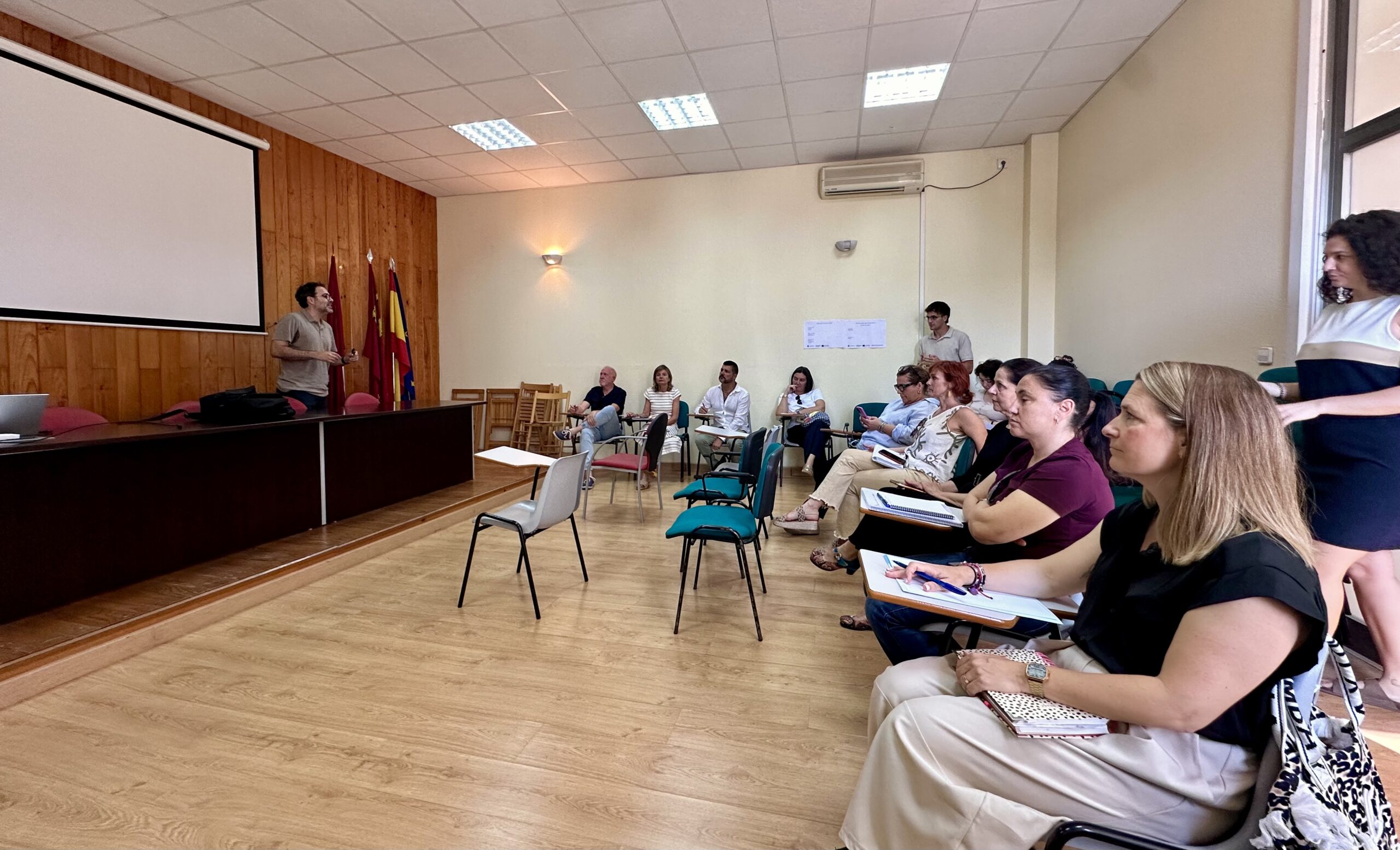

The third project meeting made it possible to define needs, review heatwave protocols and advance the communication plan to protect the most vulnerable population groups.
Cartagena hosted yesterday the third governance meeting of the European HEATSAFE project, led by the Federation of Municipalities of the Region of Murcia. The meeting was attended by representatives of third-sector associations, social services and European projects from Cartagena City Council, Eurovértice and members of the Federation itself.
The meeting helped move forward with the sharing of the needs to be included in the Local Action Plan against high temperatures, especially in situations of alert or emergency due to extreme heat.
During the session, key issues were addressed, such as prevention, coordination between municipal services, support for vulnerable groups and communication with citizens. Existing heatwave protocols were also reviewed, and proposals were collected through group dynamics to improve the local response.
HEATSAFE aims to improve the prevention, mitigation and management of risks arising from climate change and the increasing frequency and intensity of heatwaves in the Mediterranean. The project promotes the joint design of local action plans and demonstrative pilot actions.
In Cartagena, HEATSAFE includes the creation of a climate shelter in 2027, together with actions to improve the municipal response to episodes of high temperatures. These include the adaptation of public spaces, the creation of a network of climate shelters, the improvement of shade and irrigation systems in alert situations, the monitoring of vulnerable people and a local awareness-raising campaign.
Challenges posed by extreme heat
One of the main challenges identified is the need to strengthen multilevel and multisectoral governance, improving coordination between public administrations, social organisations, technical services and citizens.
This collaboration is key to protecting the population, especially older people, people with disabilities, low-income families and other groups vulnerable to episodes of extreme heat.
The session also made it possible to review the communication plan planned for this summer, with the aim of ensuring that messages reach all audiences in a clear, accessible and understandable way.
HEATSAFE has six study areas in the Mediterranean: Cartagena, the Barcelona Metropolitan Area, Agioi Anargyroi-Kamatero in Greece, Blagoevgrad in Bulgaria, Durres in Albania and Arezzo in Italy.
The meeting held in Cartagena represents a new step towards strengthening the municipality’s preparedness for future heatwaves and moving towards a more resilient, safe city adapted to the needs of its population.