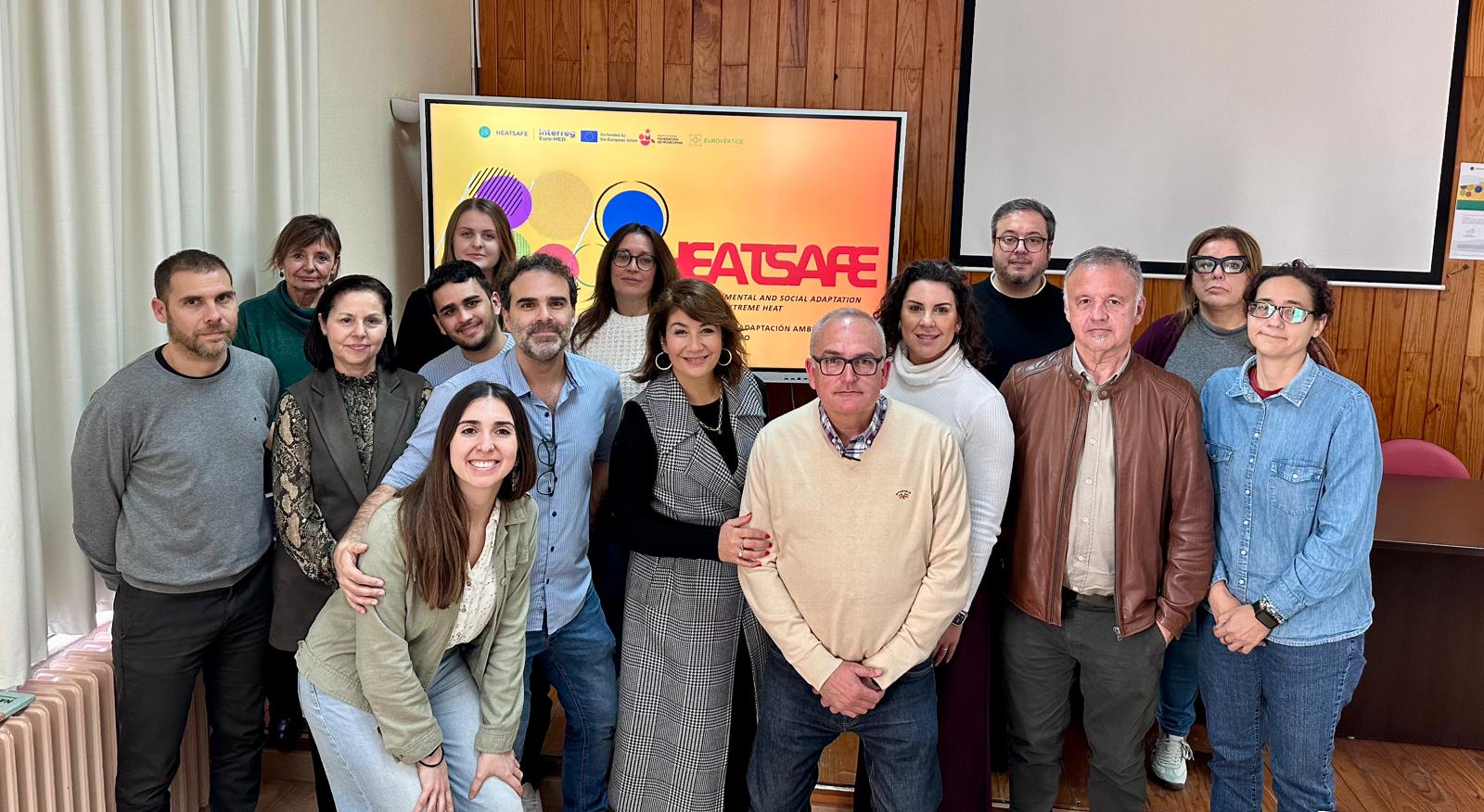

A new working day in La Milagrosa brings together social organisations and technical experts to identify critical points on the municipality’s climate vulnerability map.
Cartagena continues to work on the implementation of the European HEATSAFE (Holistic Environment and Social Adaptation Framework for Extreme Heat) project led by the Federation of Municipalities of the Region of Murcia, and on the schedule for the execution of the various planned actions with a new technical and governance meeting held at the municipal offices in La Milagrosa.
This meeting, which positions Cartagena as one of the key urban laboratories of the Interreg Euro-Med programme, served to coordinate strategic partners, the Federation of Municipalities of the Region of Murcia (FMRM) and the consulting firm Eurovértice, with municipal technicians and associations working on the ground alongside the groups most exposed to high temperatures.
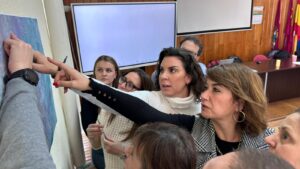
The conference was attended by a wide range of third sector organisations, educational centres and social organisations. The aim was to validate, on the ground, the vulnerability map of Cartagena, identifying the neighbourhoods and areas where it is most urgent to develop climate shelters and shading measures.
The Councillor for Social Policy, Cristina Mora, highlighted the importance of this participatory phase: “HEATSAFE is not an office project, it is a living strategy that continues to move forward with firm steps. At this meeting, we worked closely with those who best know the reality of our neighbourhoods to identify precisely where we need to take action. Because we are talking about something that goes beyond scientific data: we are talking about comprehensively addressing social vulnerability and climate vulnerability, listening to the associations that work every day alongside our elderly, children and homeless people, who suffer most intensely from the effects of extreme heat.”
Actions and awareness-raising in Cartagena
During the session, the upcoming awareness campaigns and interventions to be carried out in the municipality were outlined. Cartagena is preparing to implement rapid response protocols and transform urban spaces into ‘oases’ that combat the heat island effect.
Among the most notable actions is the installation of shade structures (climate shelters) in Plaza Carmen Conde. This strategic intervention, which is expected to be completed around 2027, is funded by the HEATSAFE project through the Federation of Municipalities of the Region of Murcia in collaboration with the City Council of Cartagena.
‘We continue to hold these meetings with European and local partners because climate resilience requires consistency. Cartagena is determined to be a prepared city, and these meetings are essential so that, when next summer arrives, we have a more robust protection network and more agile communication between all administrations,’ added Mora.
The HEATSAFE project will continue in the coming months with the validation of technological solutions and the creation of a network of seasonal climate shelters. With this new meeting, the City Council reaffirms its commitment to a city model that prioritises public health and climate justice, actively collaborating with partners from Greece, Bulgaria, Italy and Albania.